#concurrency
3 posts
-
Eight Cheap Calls Beat One Good One — Why I Removed the Model That Wrote Better
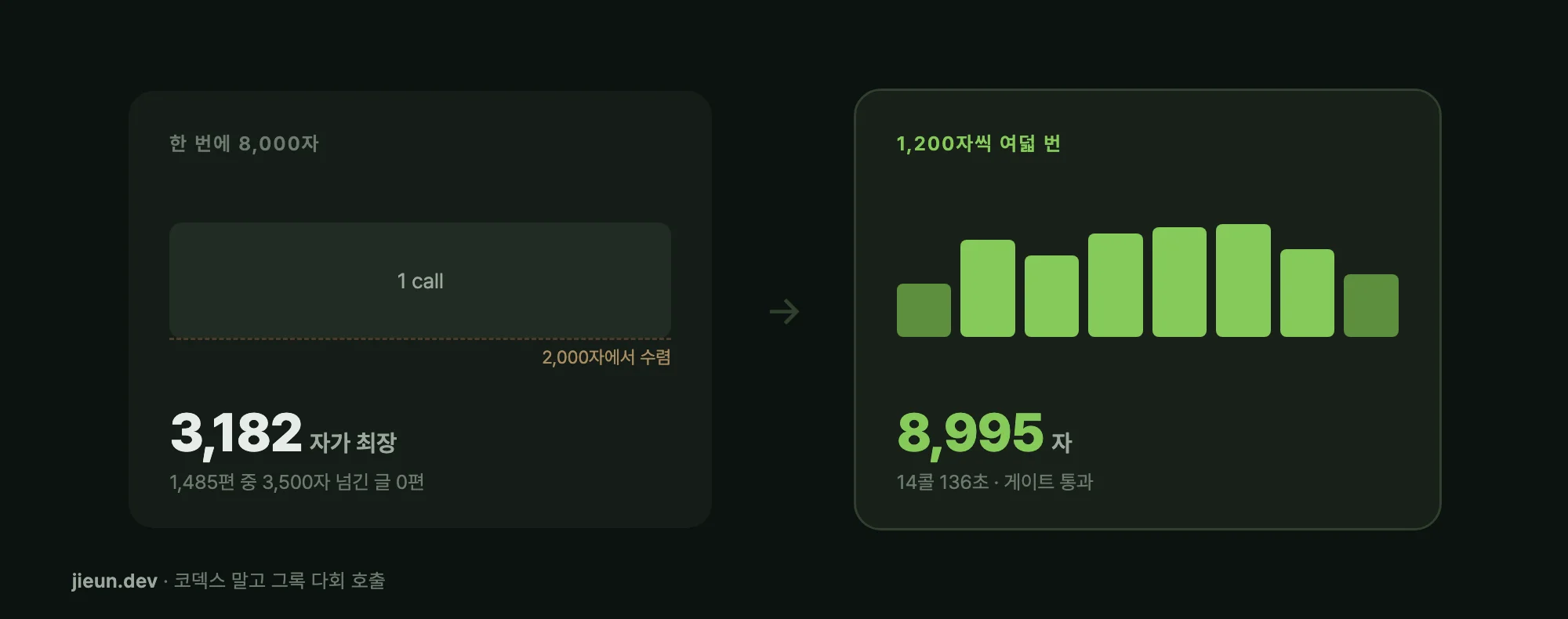
I ran both engines on the same topics for ten days. Codex won on a close read of the output, and Codex is the one I deleted. No prompt could push either model past a length ceiling; what broke it was splitting the call, not swapping the model. Once the shape became many short calls, per-call latency decided everything. Grok's quality gap got closed with 4,000 characters of source and a code-level diff of every number.
-
[Messenger Load-Testing, Part 3] FCM to a Queue, Swallowed Failures to Sentry — Cleaning Up the Message-Send Handler
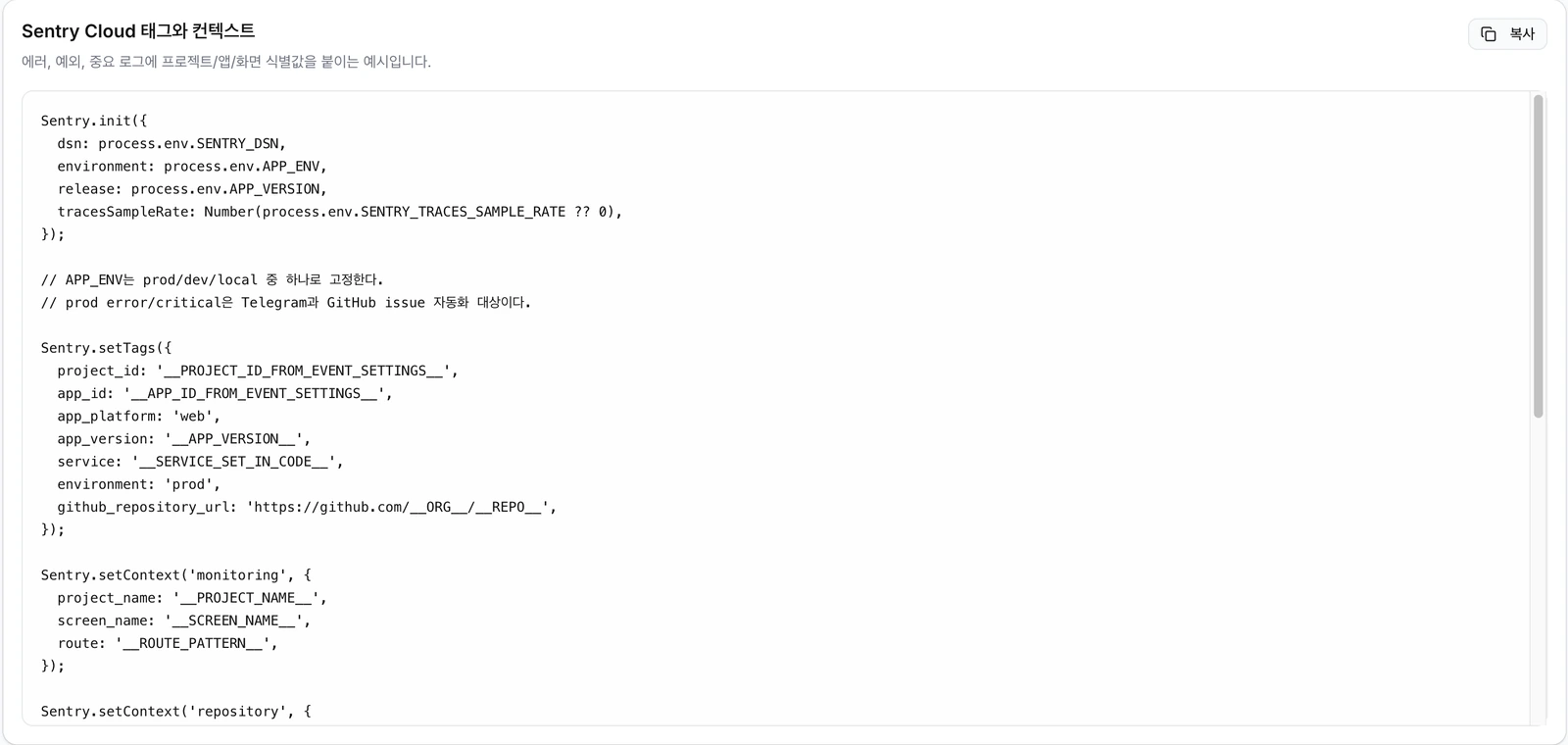
Part 3 of load-testing a messenger: pulling FCM push out of the message-send handler into a dedicated worker queue, and surfacing the failures that used to vanish into empty catches through Sentry. Two axes — isolating external I/O and handling error logs.
-
[Messenger Load-Testing, Part 2] There Was a Deadlock Hiding in AI-Generated Code — How We Replaced `unreadCount` with `lastReadAt`
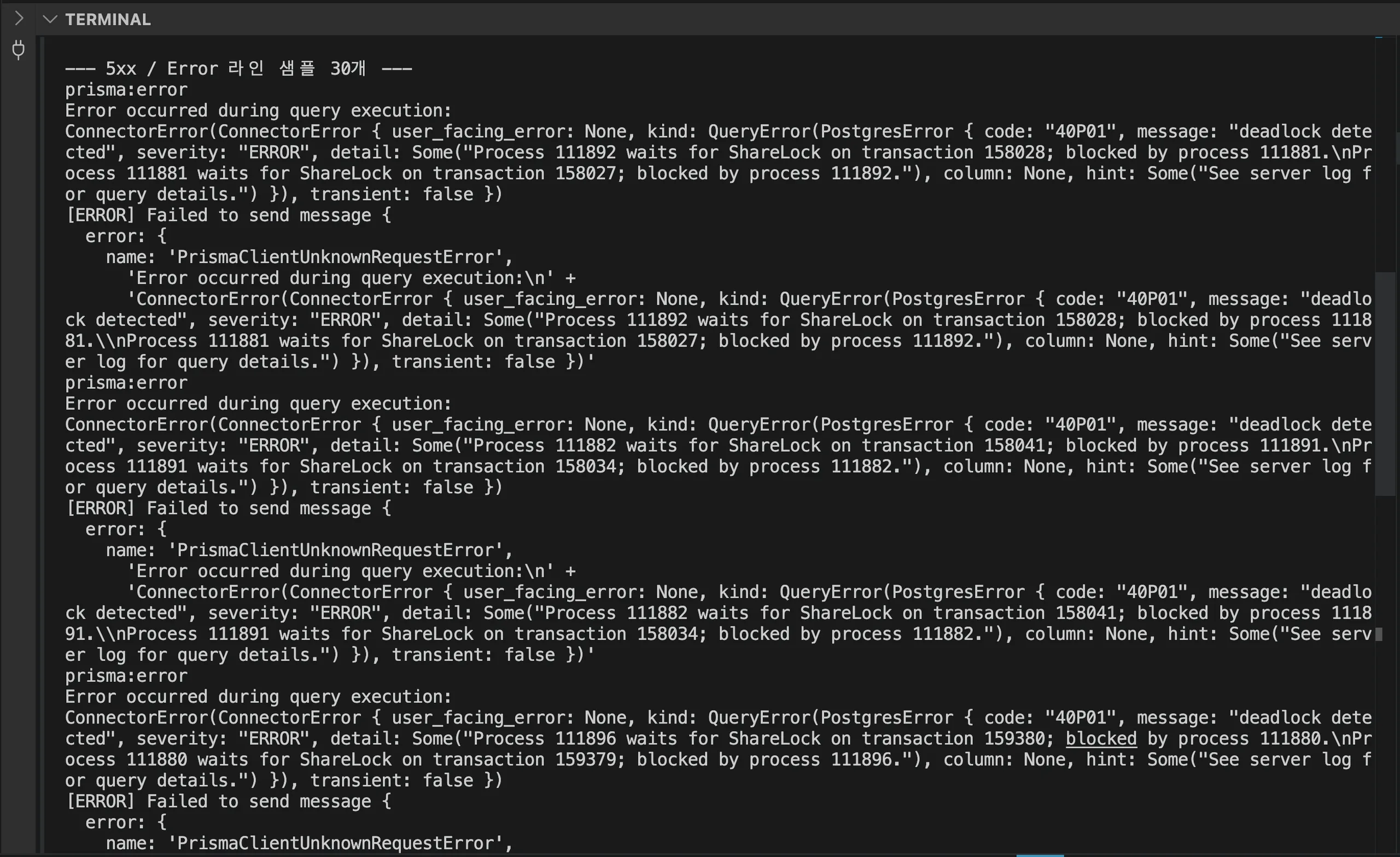
42.8% HTTP error rate, 9 minutes into a load test, at 12% of the target TPS. The culprit was a single updateMany line written during AI-assisted coding.