No matching posts.
Deservewhatyouwant.
All Articles
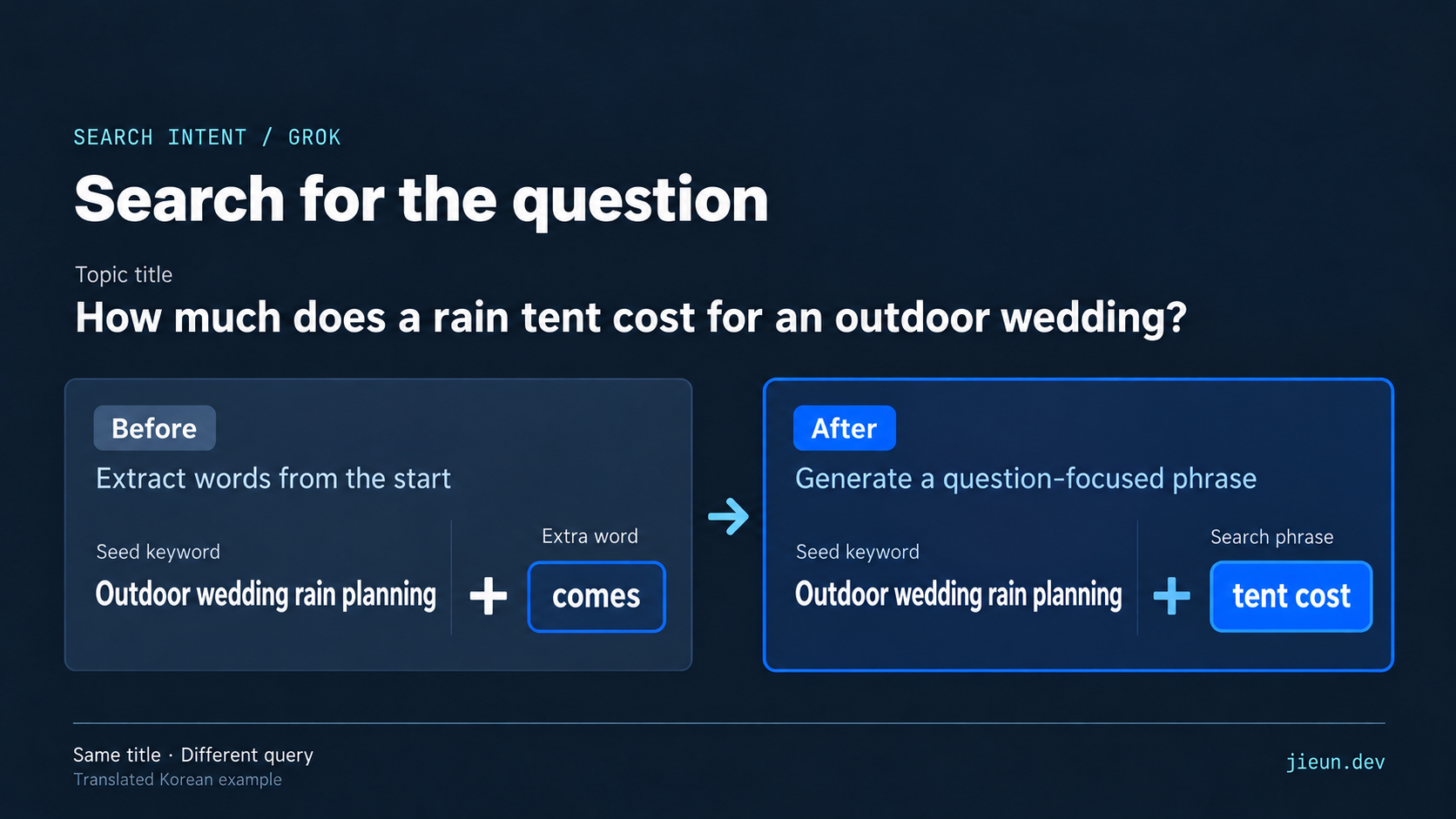
I traced similar sources across different topics back to the actual search queries and code. Grok expresses the question, while code preserves search intent and assigns platform sources.
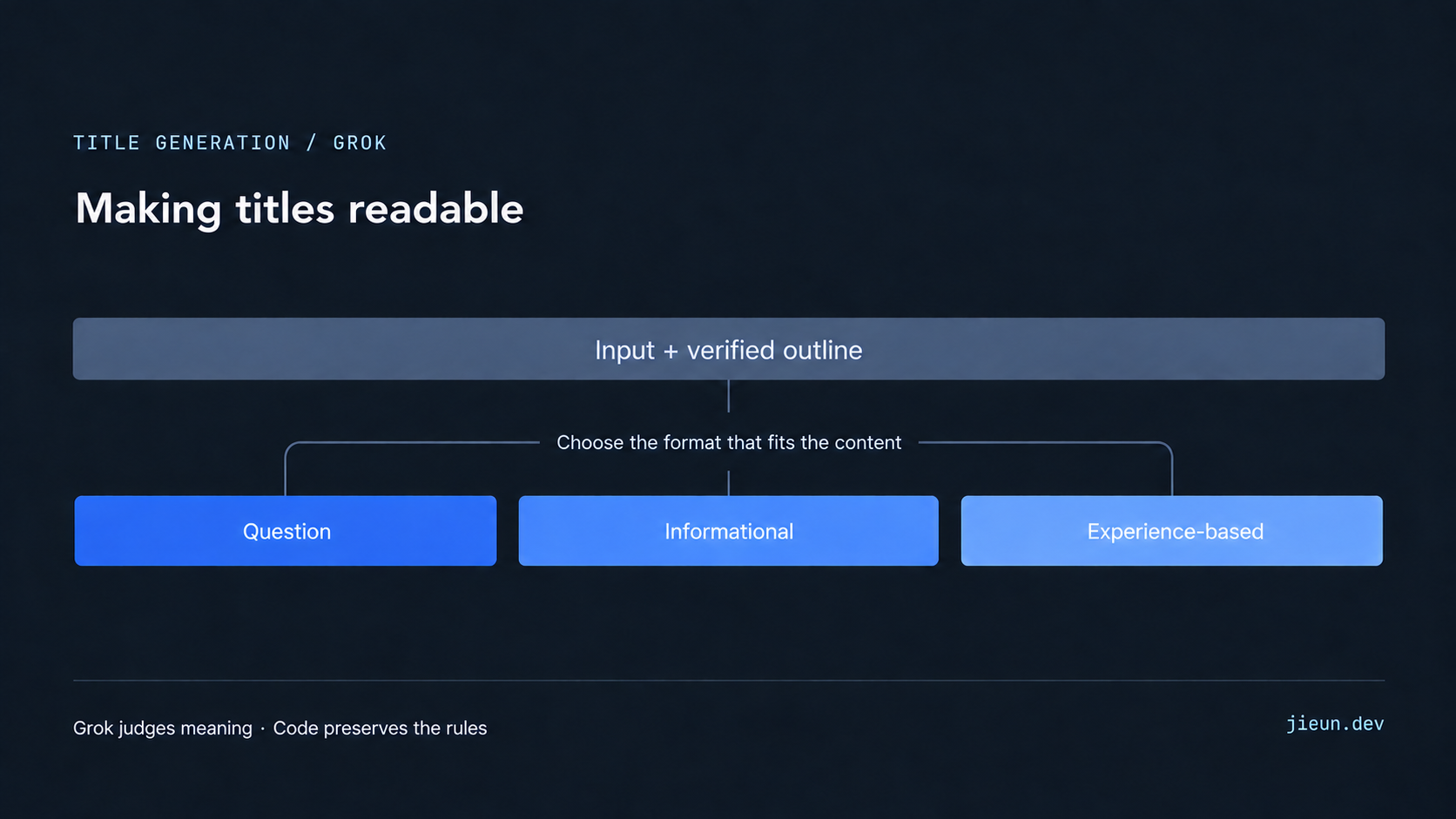
Letting Grok judge meaning while code preserves and validates titles
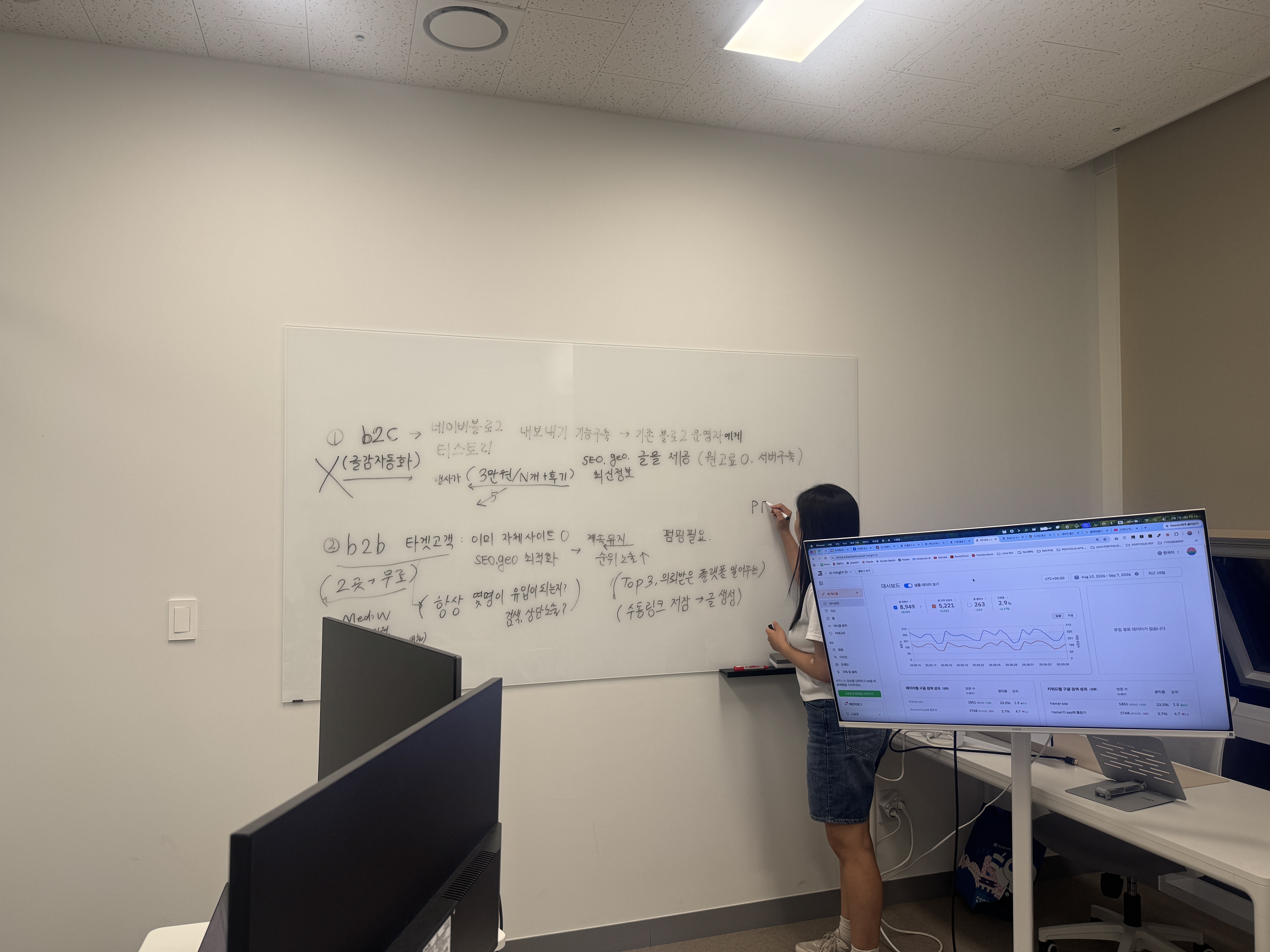
How beta users' questions and behavior changed Wiblog's customer hypothesis, onboarding, B2C/B2B direction, and value proposition.
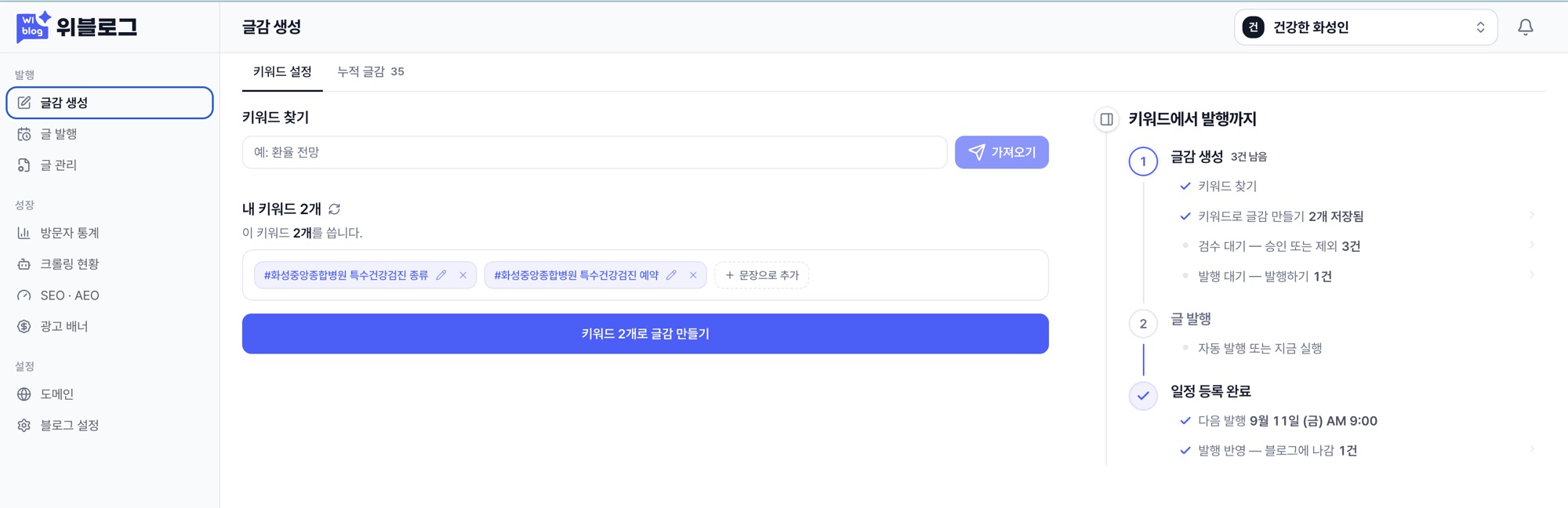
From topic ideas to publishing and search visibility
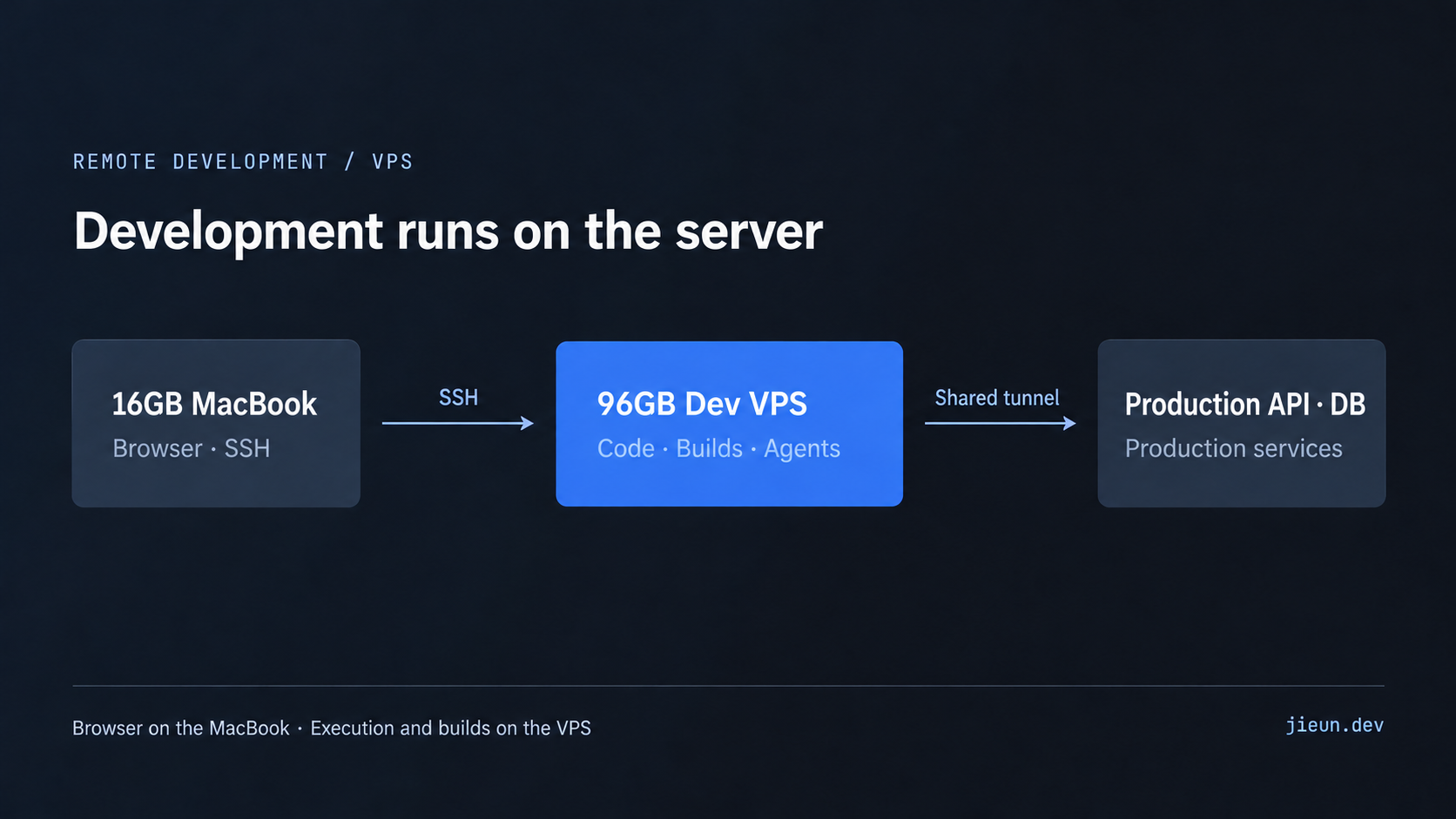
Separate workspaces and permissions, with one shared API tunnel
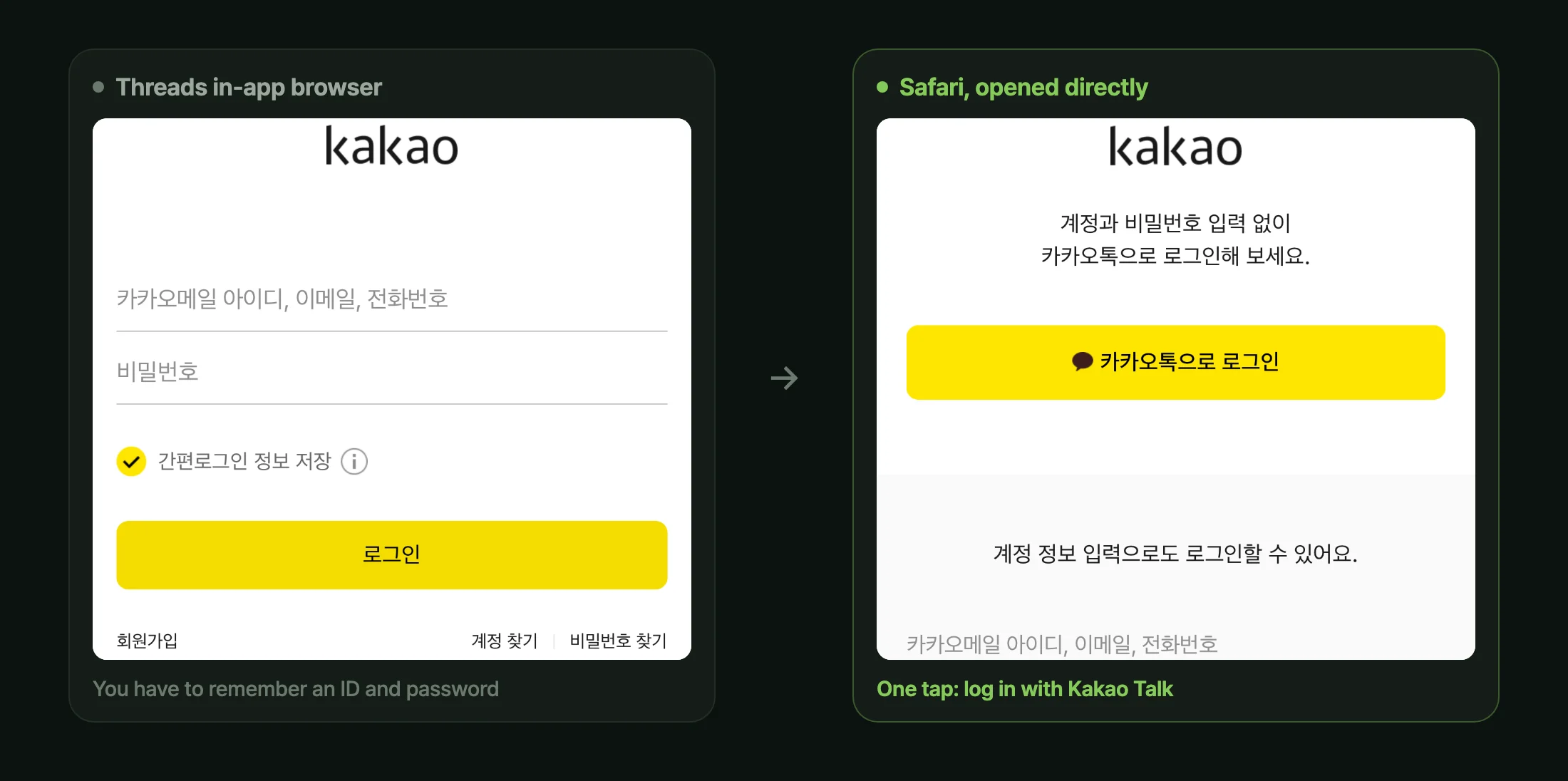
Detect, escape, fall back — for drop-offs no log catches
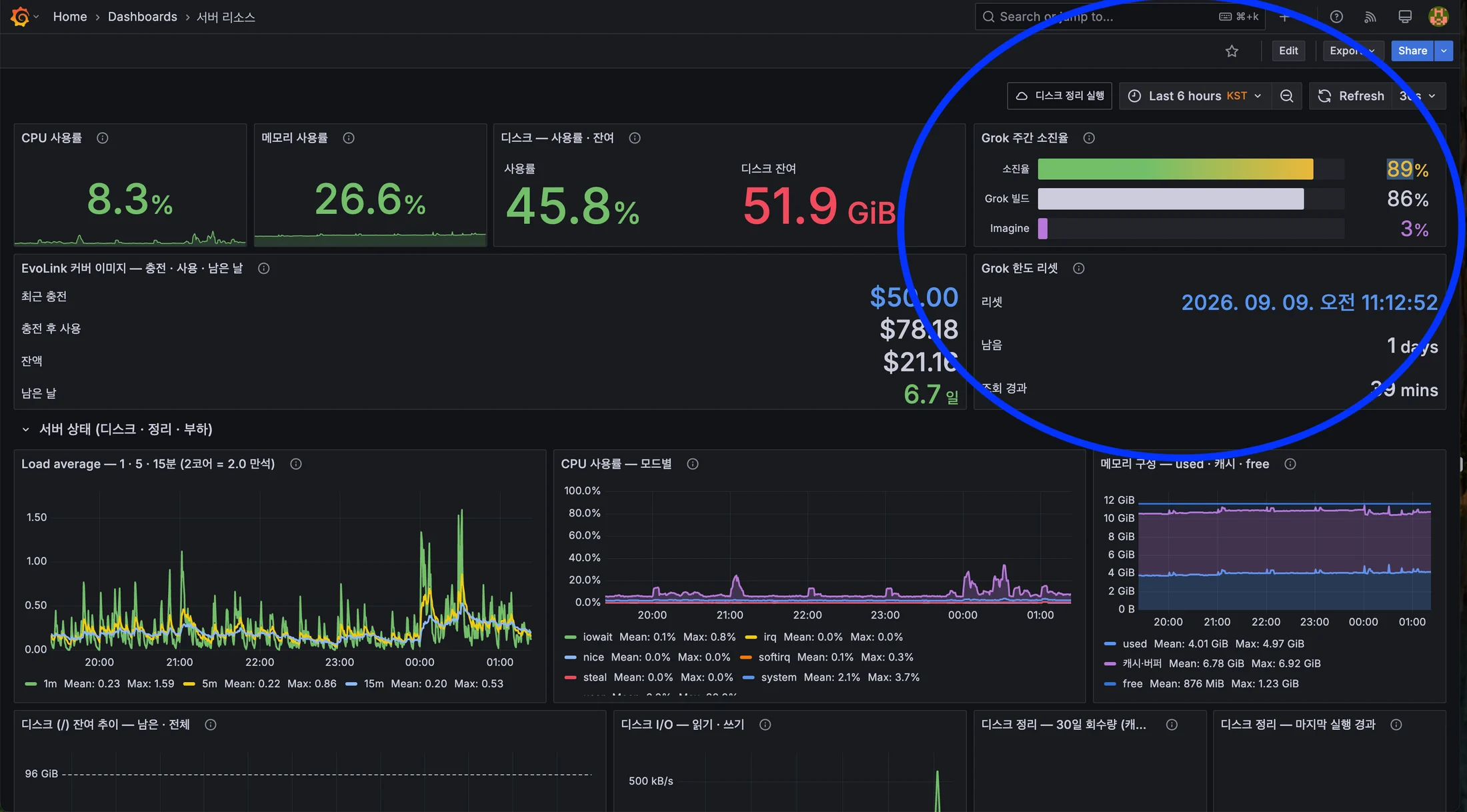
From a Grafana 88% alert to automatic failover at 80%
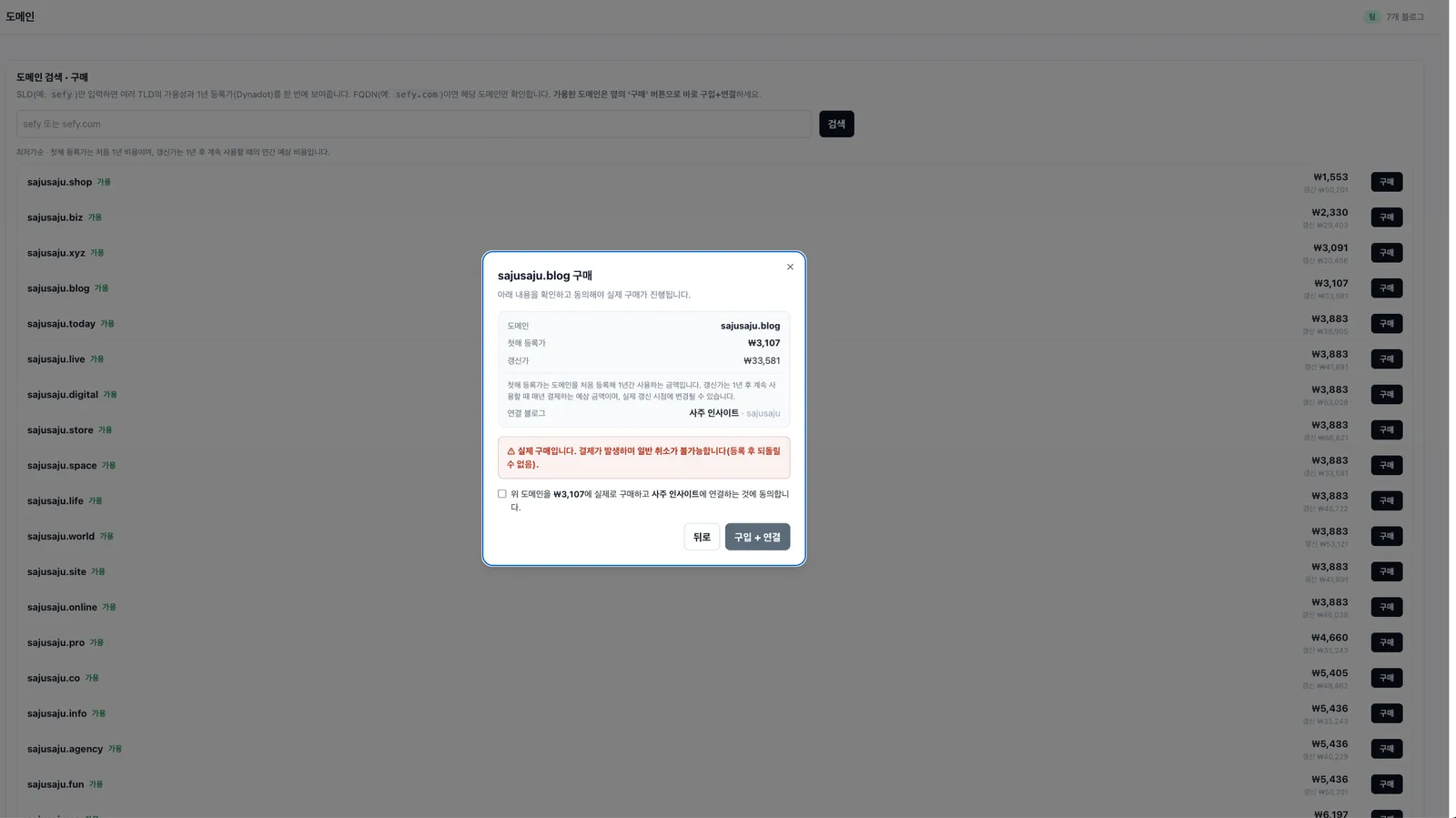
Separating immediate setup from work that waits for DNS, with connection checks and registration retries
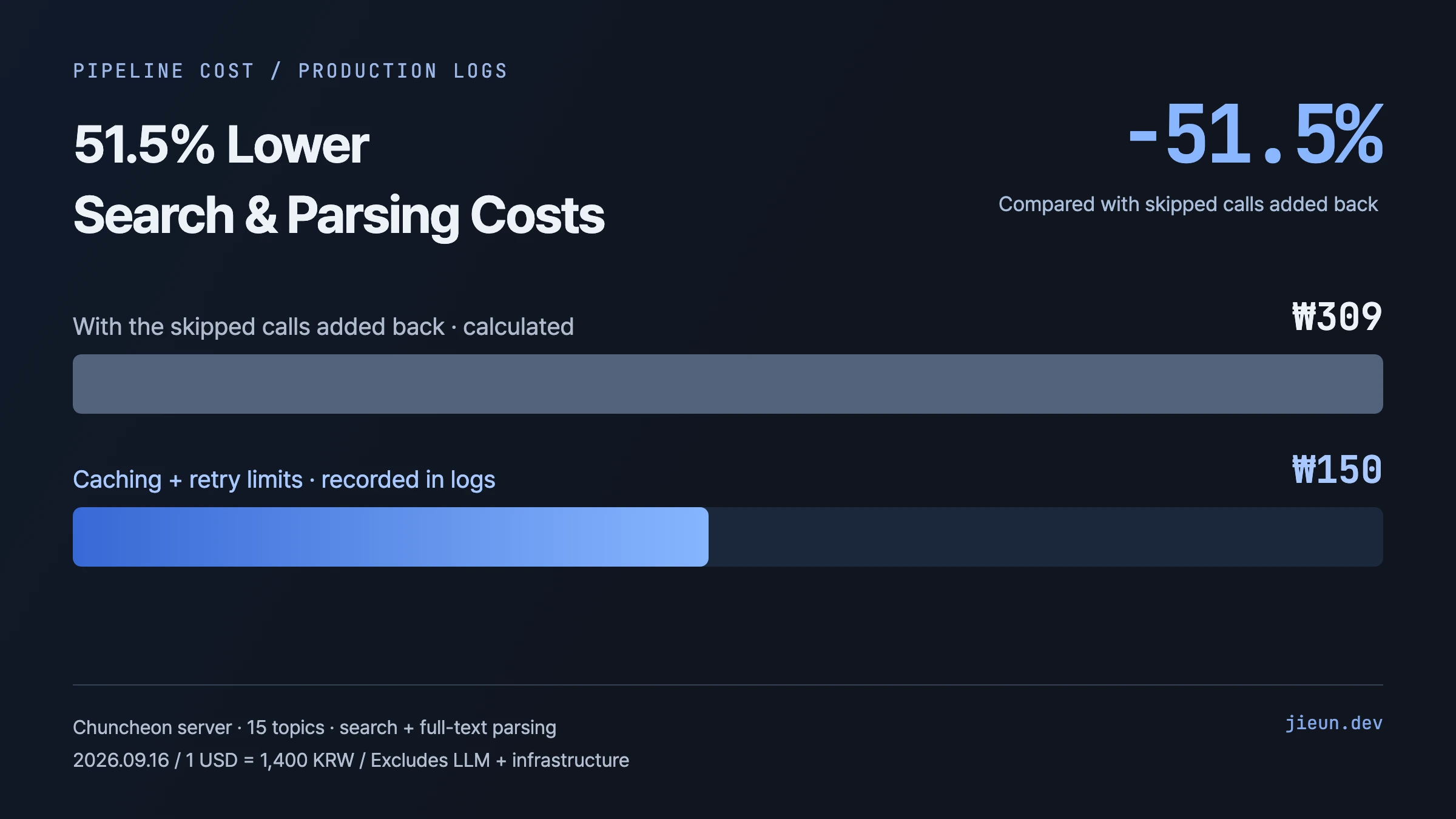
Recomputing 15 topics from logs: ₩309 down to ₩150
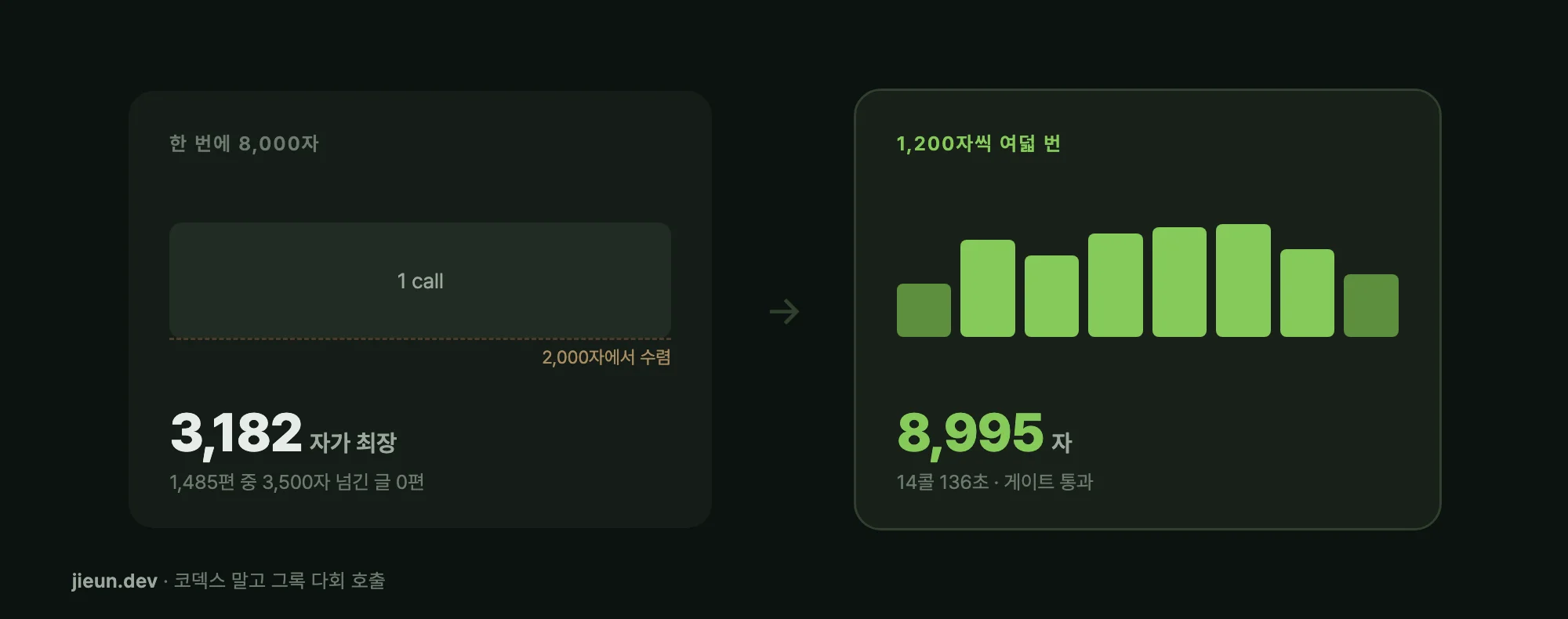
Why fast repeated Grok calls beat the better writer
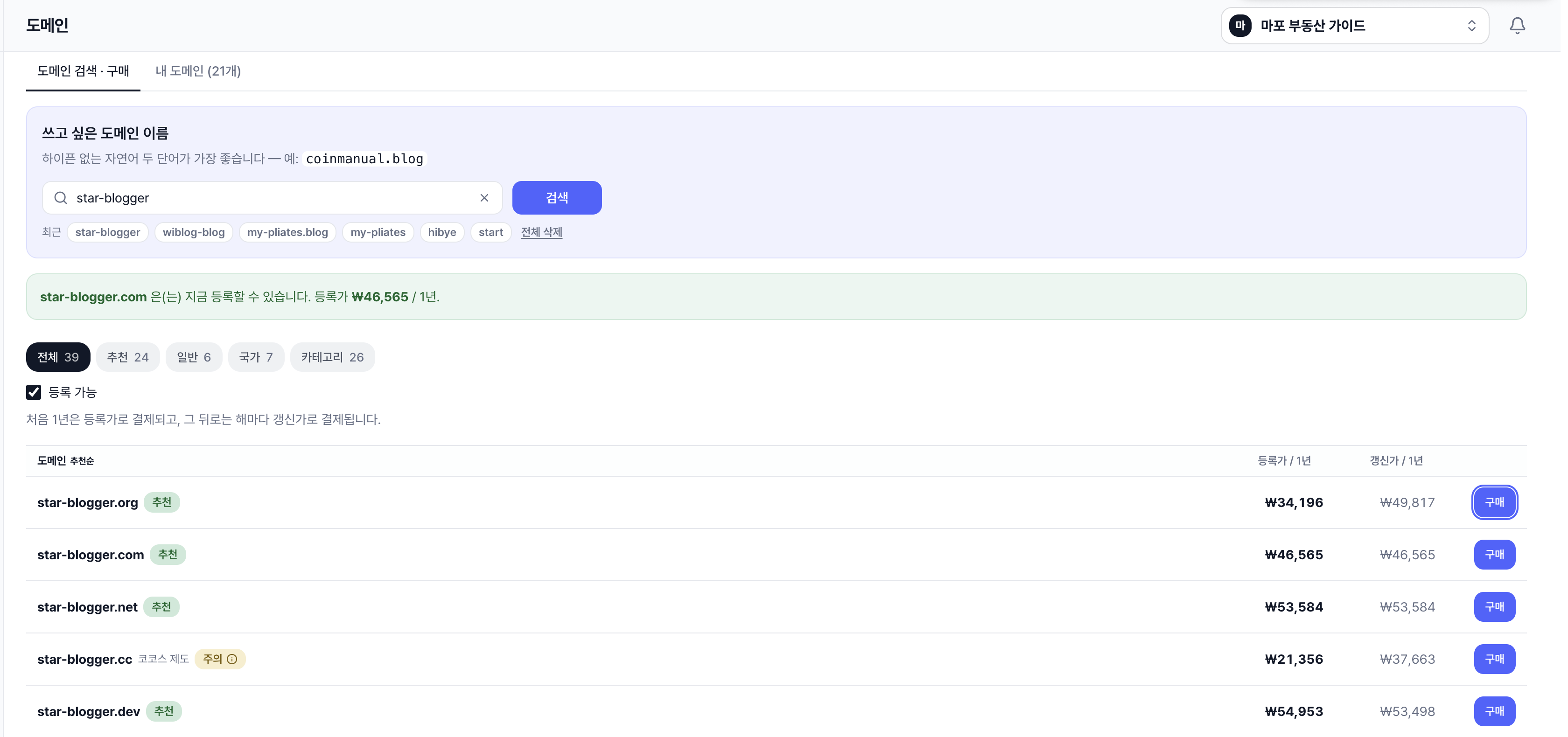
How indexing observations changed Wiblog's domain recommendations
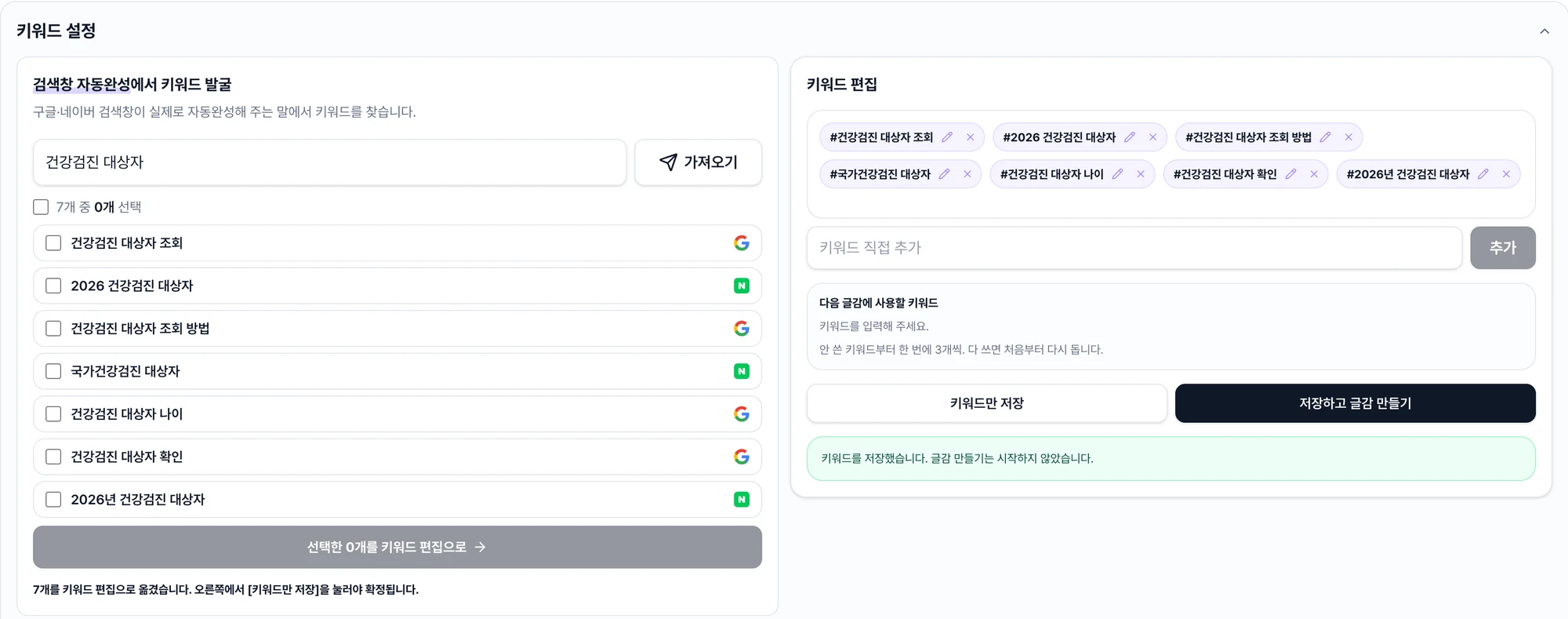
Replacing two LLM calls with one autocomplete request
Removing 60–100s outages, then the last 5 seconds
Isolating external I/O and surfacing swallowed errors
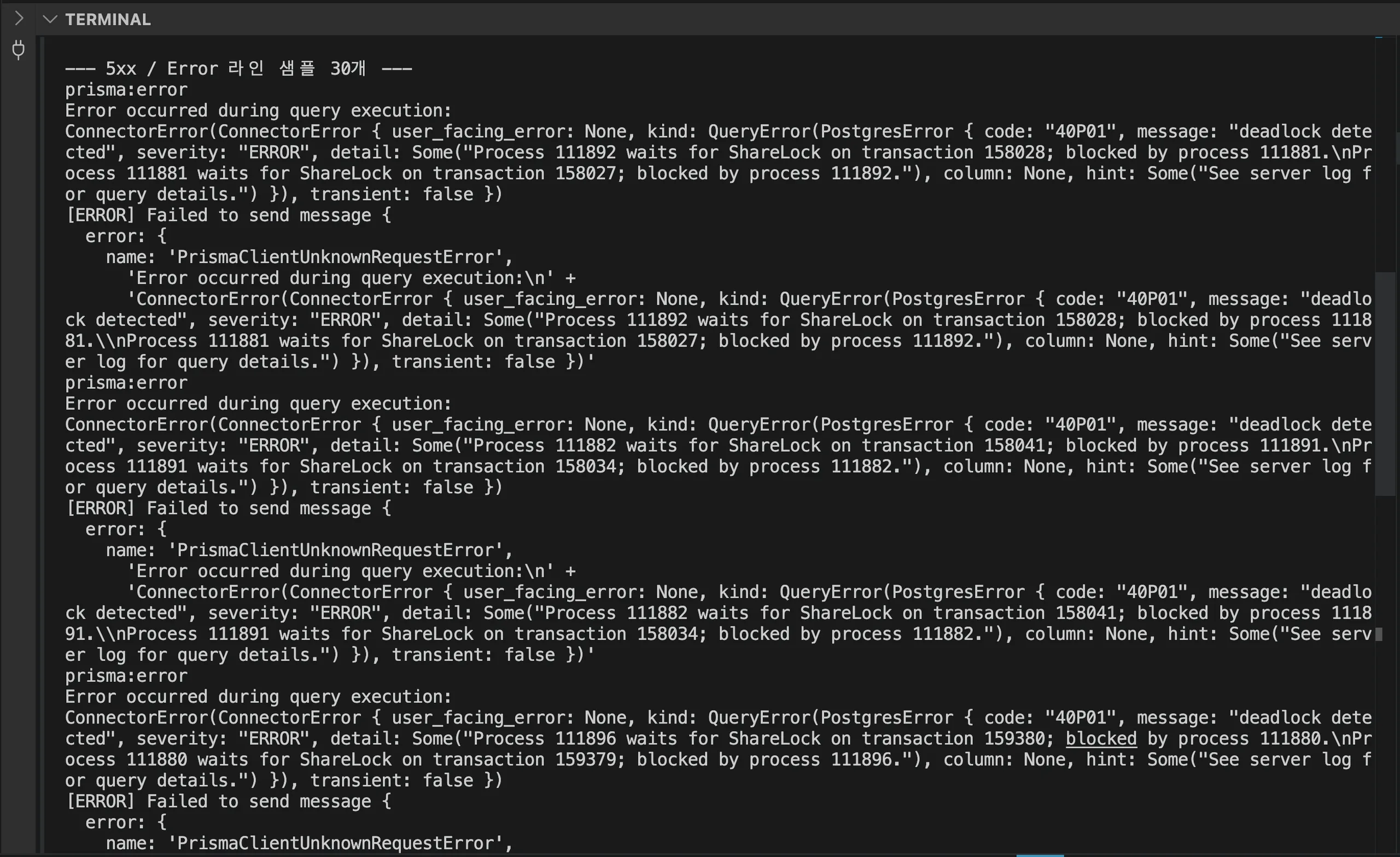
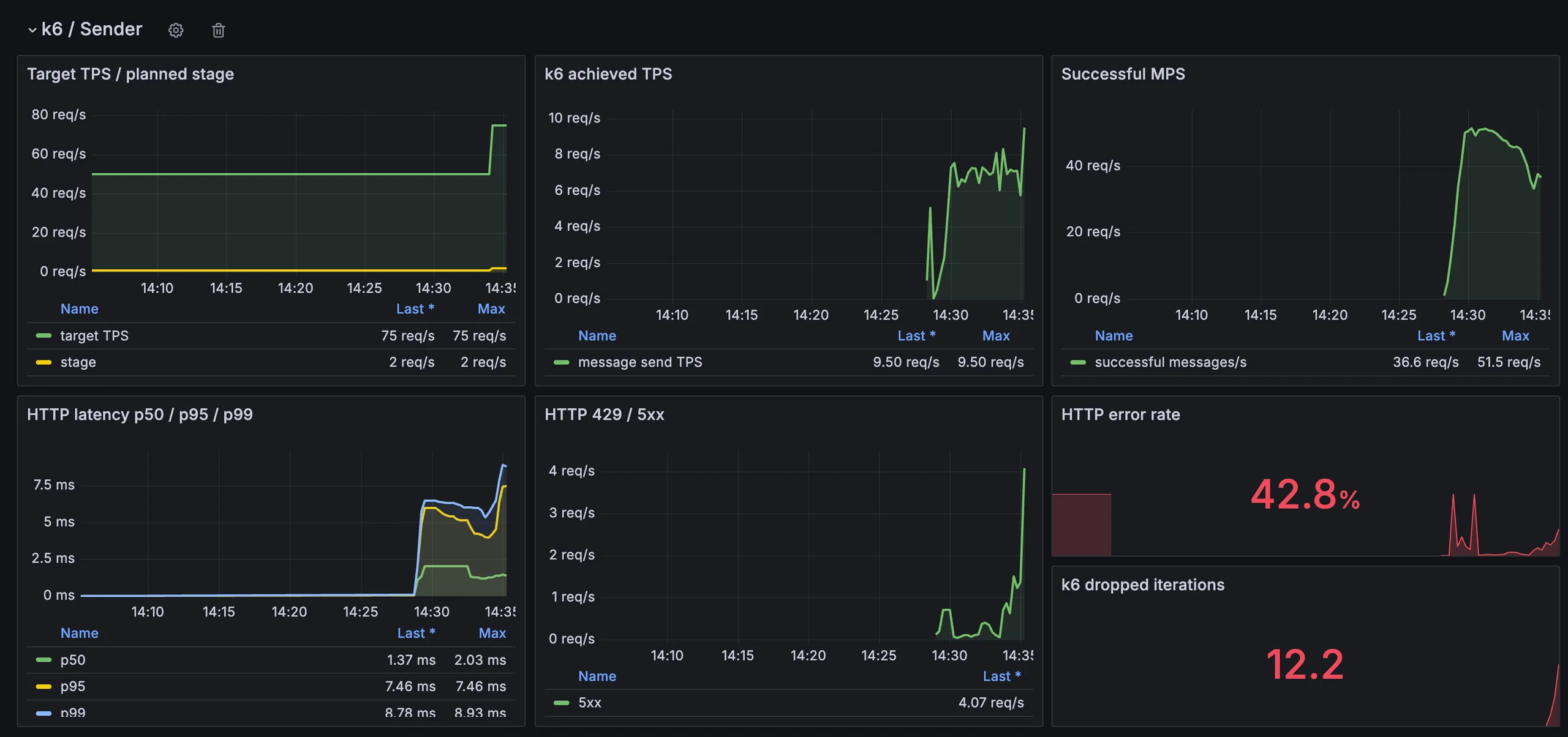
42.8% errors in 9 minutes, caused by one updateMany
A 7-node production clone, rebuilt with one make command
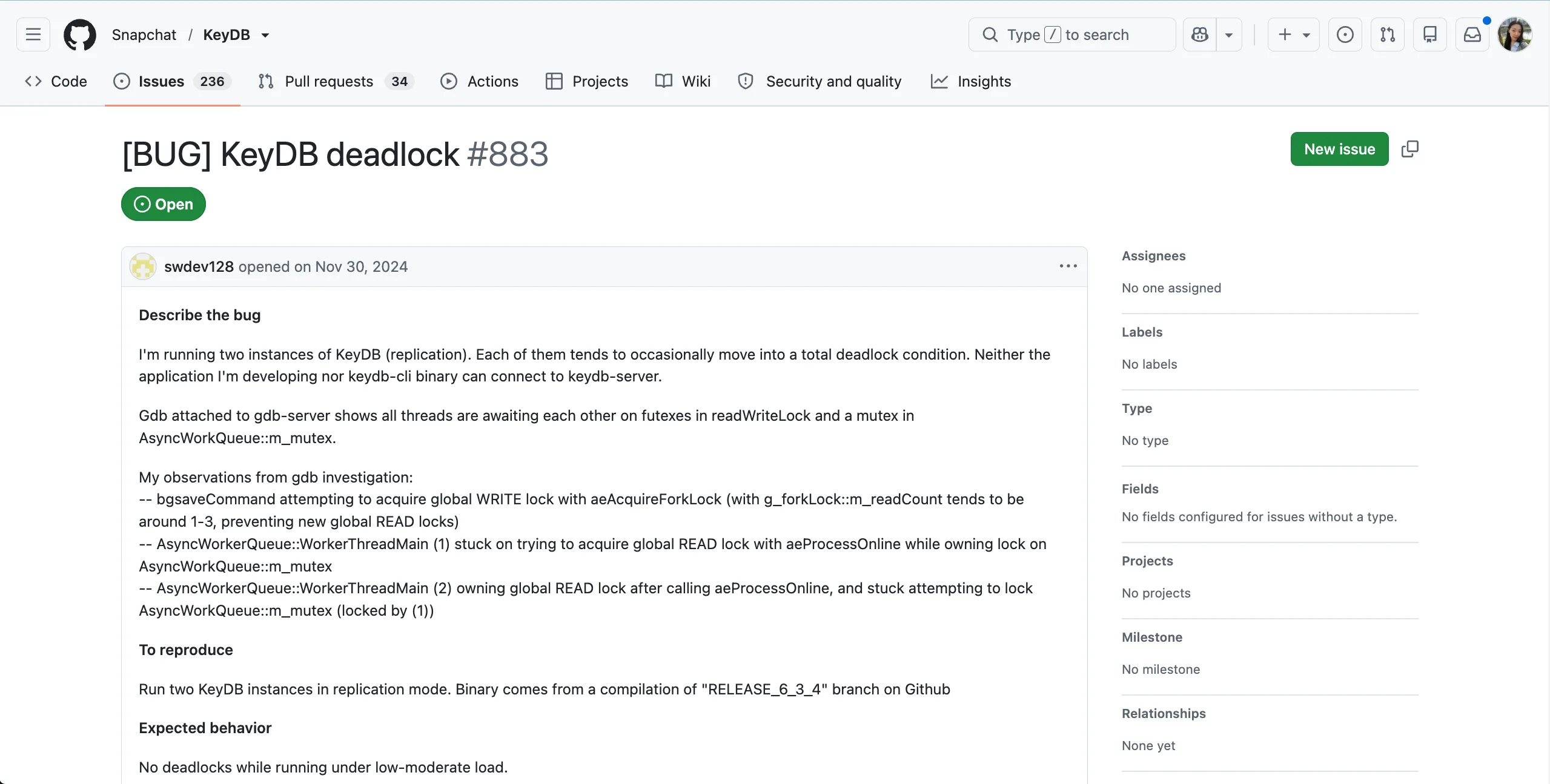
Five years of hang issues behind a perfect-looking active-replica
Surviving a 300MB heap and tab crashes with 5-minute savepoints